What To Know Before Buying Land Around Reubens
June 25, 2026
June 25, 2026
Buying land near Reubens can feel simple at first. You find a parcel with beautiful views, room to spread out, and a price that looks promising. Then the real questions start: Can you actually build on it, reach it easily, drill a well, or install septic? If you are thinking about acreage in this area, a little upfront homework can save you time, money, and stress. Let’s dive in.
One of the first things to know about land around Reubens is that you should confirm the parcel’s exact county, jurisdiction, and legal description before making assumptions. Reubens is identified as a Lewis County community in state sources, but buyers should still verify the parcel details tied to the specific property they are considering.
That matters because county rules, permitting paths, and road requirements can depend on where the parcel legally sits. A listing description, map pin, or casual local reference is not enough on its own when you are making a purchase decision.
Keep the deed legal description, parcel number, and tax record together from the beginning. Those details are commonly needed for septic applications and other property-related approvals, so having them early can make the process much smoother.
County GIS and web maps are useful research tools, but they are not legal proof of boundaries. Nez Perce County states that its interactive web map is for reference only and shows approximate property boundaries without legal warranty.
That means a map can help you ask better questions, but it should not be treated as final proof of lot lines, zoning certainty, or legal access. If a property purchase depends on one of those items, verify it directly with the appropriate county office and property records.
A common surprise for land buyers is that owning a parcel does not automatically mean you have the kind of access needed to use it the way you want. Access can involve separate questions about legal rights, physical entry, road frontage, and whether the property connects to a public road.
County guidance notes that most jurisdictions require legal access from each lot or parcel to a public road, along with a physical address for 911 and mail delivery. It also notes that services like road maintenance, garbage pickup, and mail delivery are generally provided on public roads, not private roads or driveways.
A parcel may appear easy to reach on a map and still have access issues. You want to know whether there is recorded legal access, whether an easement exists if needed, and whether the site is practically buildable from an access standpoint.
In plain terms, frontage, easements, and buildable access should all be checked separately. Road access is not automatically the same as legal access, and legal access is not always the same as easy physical access for future construction.
If the property will need a new road connection, there may be another approval step. Nez Perce County says approach permits are handled through Road & Bridge, and the Idaho Transportation Department handles right-of-way permits for state roads.
This is one of those details that can affect both cost and timing. Before you close on vacant land, it is smart to find out what kind of access already exists and what would be required to improve it.
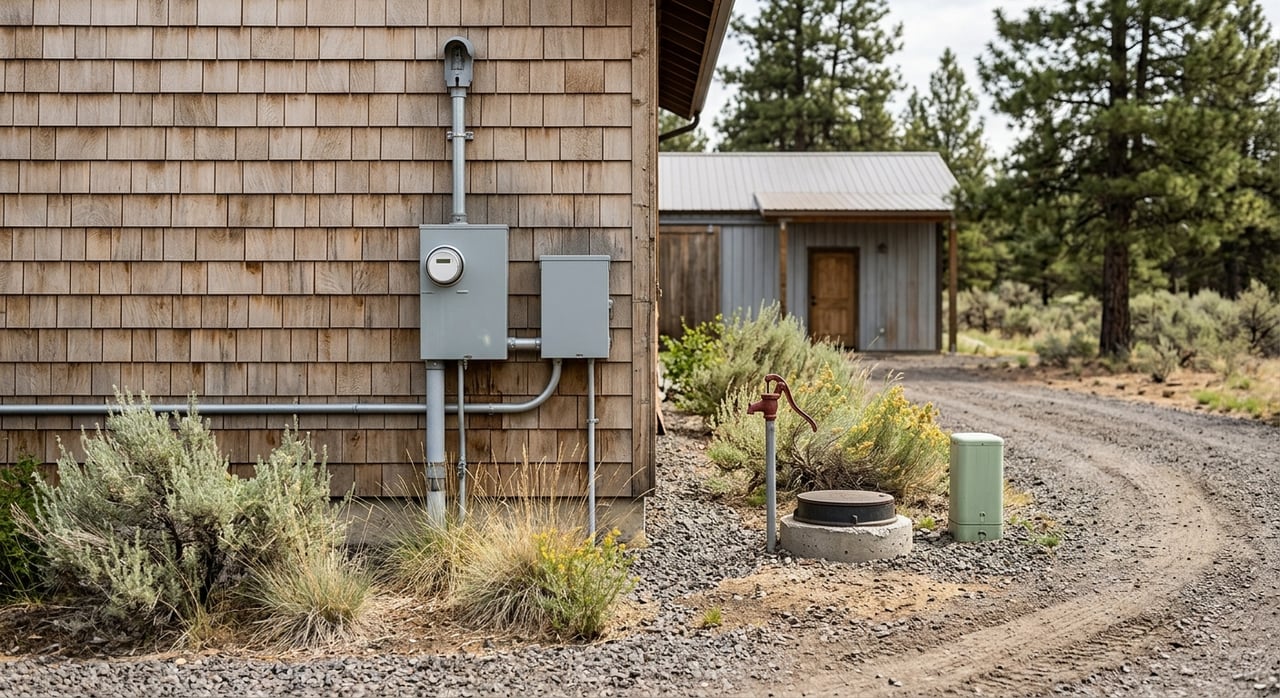
For many rural parcels, water and wastewater are the biggest practical hurdles. A low purchase price can look attractive until you factor in the cost of drilling a well, testing water, planning a septic system, and preparing the site.
Public Health - Idaho North Central District serves both Lewis and Nez Perce counties for environmental health services related to septic systems. That includes septic permits, site evaluations, and enforcement of Idaho Department of Environmental Quality rules for on-site sewage systems.
If a parcel will need a private well, you should understand that the well process has its own rules and responsibilities. Idaho Department of Water Resources says a drilling permit is required before drilling a well in Idaho, and all wells must be constructed by an IDWR-licensed well driller.
Idaho DEQ also says private well owners are responsible for drinking-water safety. The agency recommends testing private wells for nitrate and bacteria at least once a year and advises buyers to research local conditions before drilling.
Septic approval can be very specific, and it is not something to leave until the last minute. The current septic application materials call for a detailed plot plan showing property boundaries, existing features like wells, streams, easements, and cut banks, plus the proposed sewage system and replacement area.
The same packet lists a new sewage permit fee of $1,100 and a repair, replacement, expansion, or tank-only permit fee of $450. It also says a typical site evaluation uses at least two test holes that are 50 feet apart and 8 feet deep.
Those details matter because they show how much planning can go into a lot before a home is ever built. If a parcel has difficult soils, challenging topography, or limited room for a replacement area, your plans may need to change.
Even if a parcel looks ideal, your intended use still needs to line up with local rules and approvals. Nez Perce County Planning and Building says it issues building permits, administers land-use ordinances, and reviews conditional uses, subdivisions, and zone changes.
Its applications include permits for single-family residences, accessory buildings, and agricultural buildings, along with land-use applications for administrative land division, conditional use, preliminary plat, variance, and zone change. If you plan to build now, add a shop later, or divide the property down the road, these are important items to understand before you buy.
When you look at land, try to move past the broad question of “Can I build?” and ask more detailed questions instead. The answers may be different depending on whether you want a home, a shop, a barn, or future division potential.
Helpful questions include:
Some buyers focus so much on views, acreage, and access that they forget to check floodplain status. That can be a costly oversight if development is planned.
Nez Perce County says a floodplain development permit is required before development begins in any special flood hazard area, including the 100-year floodplain or A Zone. For some residences, an elevation certificate may also be required.
Even if flood risk seems unlikely, it is worth confirming early in your due diligence. A floodplain issue may not kill a deal, but it can add design, permitting, and construction requirements.
Land buyers often focus on what a parcel costs now, but the better question is what it will take to use the property the way you want. A lower-priced lot may end up costing more overall if it needs extensive site work, well drilling, septic engineering, or access improvements.
Future plans matter too. Nez Perce County’s comprehensive planning materials note that much of the county is rural, including agricultural, rangeland, and forest areas, and the future land-use map is a planning tool rather than an exact property-line overlay.
That means broad planning context can be helpful, but it is not the same thing as parcel-level approval. If your long-term goal includes building, farming-related improvements, or dividing land later, verify those possibilities directly rather than assuming they will be allowed.
Before you move forward on land around Reubens, make sure you have answers to the basics:
This kind of due diligence does not remove every unknown, but it helps you spot red flags before they become expensive surprises.
If you want local guidance as you compare parcels, ask questions, and make sense of the process, Kiley Waldemarson can help you approach land buying with a practical, informed plan.
Stay up to date on the latest real estate trends.



I am committed to guiding you every step of the way—whether you're buying a home, selling a property, or securing a mortgage. Whatever your needs, I've got you covered.

909 Bryden Ave Lewiston, ID 83501