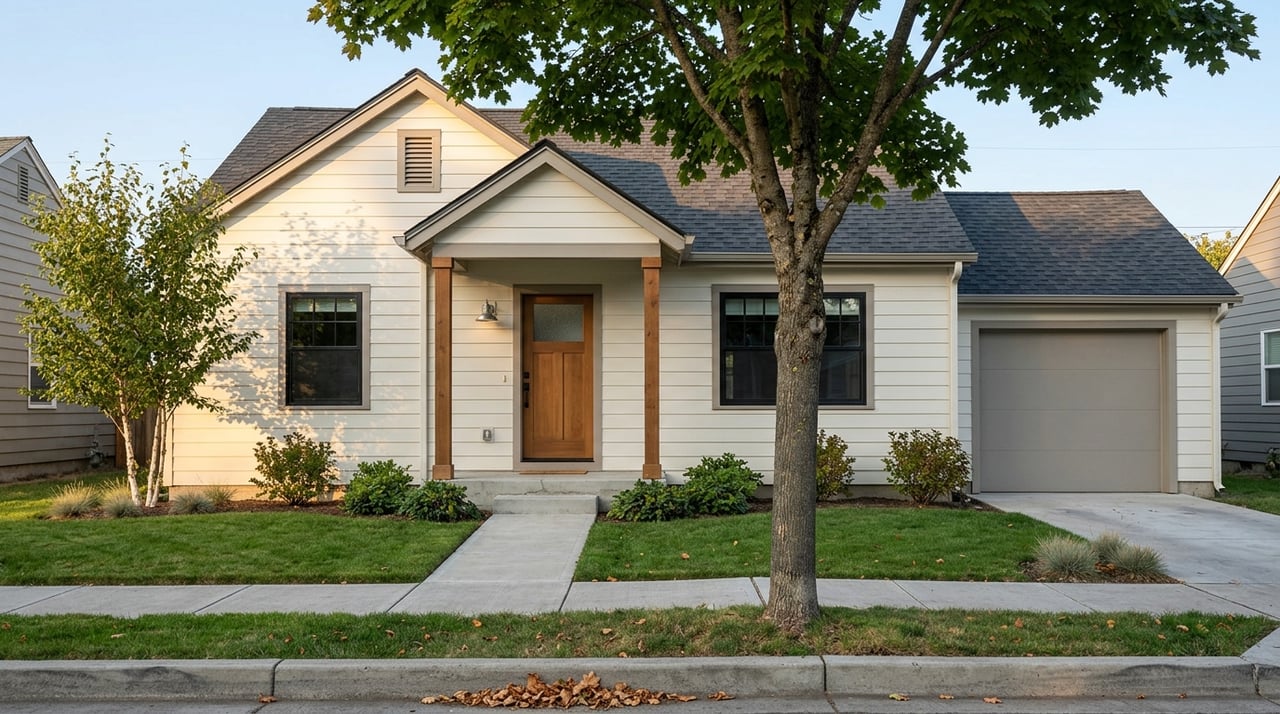
Relocating To Moscow, Idaho: Housing and Lifestyle Overview
May 28, 2026
May 28, 2026
Thinking about moving to Moscow, Idaho? It can feel hard to know where to start when one city offers a college-town core, historic neighborhoods, newer growth areas, and easy access to outdoor recreation. If you want a clearer picture of how housing and daily life work here, this overview will help you compare your options and decide what kind of move fits you best. Let’s dive in.
Moscow stands out as a university city with a compact layout and several distinct ways to live. Campus and downtown are only minutes apart, which gives the city a connected feel that is different from many small towns.
That close-knit layout shapes daily life in a practical way. You can look at housing based on how you want to move around, whether that means walking, biking, taking transit, or driving more often.
For many newcomers, that is the biggest advantage. Instead of choosing only by price or square footage, you can also choose by lifestyle and how close you want to be to campus, downtown, parks, and major roads.
Moscow’s housing story is easiest to understand in three broad patterns. You will find university-adjacent housing, established close-in neighborhoods near downtown, and newer growth along the east side.
The city also emphasizes housing variety in its planning. According to Moscow’s Comprehensive Plan, single-family neighborhoods, student-oriented housing, and multifamily housing all exist throughout the city.
If you want the shortest access to the University of Idaho, campus-adjacent housing is often the first place to look. The university identifies Fort Russell as the closest neighborhood to campus, and it also offers on-campus apartment options for upper-division students, graduate students, and families.
The university says Elmwood, Vandal Village, and South Hill Vista have convenient parking and access to public transportation. Family housing is also located near the Children’s Center, which may matter if you are relocating with a household that wants campus access built into daily routines.
The University of Idaho also operates an off-campus housing marketplace for students, faculty, and staff. That makes this area especially relevant if your move is tied to the university and you want housing options close to work, classes, or campus services.
If you want historic character and close-in living, Fort Russell is again one of the clearest examples. City historic district materials place it northeast of downtown and within walking distance of the central business district.
The area is recognized for its traditional grid pattern, mature tree canopy, and homes built largely in the late 1800s and early 1900s. The city also recognizes both the Fort Russell Neighborhood Historic District and the Downtown Historic District as part of Moscow’s preserved urban fabric.
For a relocator, that usually means a different feel from newer edge-of-town development. Streets may feel more established, the housing stock may be older, and access to downtown errands and events can be more direct.
If you prefer newer infrastructure and easier driving, the eastern part of Moscow deserves a close look. The city says much of the last 15 years of growth has occurred along its eastern boundary.
Mountain View Road plays a major role in that area because it is the only north-south arterial on that side of town. The city describes it as a corridor that carries commuter, residential, bicycle and pedestrian, and farm-haul traffic.
Recent reconstruction widened the road into a multi-modal street with ADA improvements and a roundabout. If you want a part of Moscow that may feel simpler for everyday driving and access, this area may line up better with your priorities than the tighter street pattern near the historic core.
One of Moscow’s biggest lifestyle advantages is that you do not have to rely on only one way of getting around. Depending on where you live, daily routines can be surprisingly flexible.
That is especially true in the campus-downtown corridor. Free transit, trail connections, and a strong walking and biking culture make car-light living more realistic here than many buyers expect.
SMART provides free bus service and dial-a-ride from the Intermodal Transit Center. The University of Idaho also promotes alternative transportation, bicycle access, pedestrian circulation, and car-share or ride-share options.
The city’s Traffic Safety Unit says more than 15% of commuters walk or bike to work or school. Along with the city’s ADA Transition Plan for pedestrian facilities, that helps explain why the core of Moscow can work well if you want to drive less often.
Paradise Path is a major part of how Moscow functions. The city describes it as a mostly level route linking Pullman, the University of Idaho campus, downtown Moscow, Highway 95, and the Troy corridor.
It connects to the Bill Chipman Trail on the west and the Latah Trail on the east. For everyday life, that means biking and walking are not just recreational extras. They are built into the city’s circulation pattern.
If you plan to drive often, winter conditions still matter. The city says major streets are plowed first during snowfall, and it can take about 36 hours of 24-hour operations to make one pass on all city streets.
Moscow Pullman Highway, Highway 8, and Highway 95 are state roads maintained jointly by the City and the Idaho Transportation Department. In practical terms, major routes tend to get attention first, while neighborhood streets can take longer during heavier snow events.
For a city of its size, Moscow offers a strong recreation base. That can be a real quality-of-life factor if you want easy outdoor access built into your week.
The city reports 21 developed parks and facilities, two swimming pools, one recreation center, more than 3 linear miles of trails, and over 179 acres of maintained park land, open space, trails, civic grounds, and streetscapes.
Local recreation is not limited to one park or one trail. The city highlights paved trails, established parks, and indoor and outdoor facilities throughout town.
Mountain View Park is one example on the northeast side. The city lists a bike trail, playground, sports fields, courts, and open space along Paradise Creek, which shows how neighborhood-level recreation is woven into daily life.
The University of Idaho adds another layer with the Arboretum and Botanical Garden, the Student Recreation Center, and other outdoor recreation spaces available to students, employees, and the broader Moscow community. That gives newcomers more options than a typical small-city gym-and-park setup.
If you like day trips and bigger landscapes, Moscow Mountain is one of the strongest nearby draws. The University of Idaho describes it as a substantial biking and hiking trail system with access points off Foothill Road and Moscow Mountain Road.
The university also notes that the Experimental Forest is a 10,000-acre working forest classroom that supports local non-motorized recreation. Other nearby recreation options named by the university include Idler’s Rest, Spring Valley Reservoir, Kamiak Butte near Pullman, and Hells Gate State Park south of Lewiston.
Relocation is not only about the house. It is also about how connected your week feels once you are settled in.
In Moscow, downtown plays a big role in that lifestyle picture. Because it is only minutes from campus, the city has an active center that supports both errands and community events.
One of the best examples is the Moscow Farmers Market, which runs every Saturday from May through October in downtown Moscow. The university says it brings local produce, artisans, musicians, and community activity into the center of town.
That kind of steady programming helps explain why housing close to campus and downtown is such a practical starting point for many relocators. If you want everyday convenience along with a strong local rhythm, this part of town often makes sense.
Moscow also connects well to the surrounding area. Paradise Path links west toward Pullman and east toward Troy, while US-95 serves as Idaho’s only north-south continuous highway.
That broader network gives Moscow a regional feel. Rather than functioning like an isolated small town, it works more like a compact hub for people moving between Moscow, Pullman, and the larger Palouse and Lewiston travel network.
The best area for you depends on what you want your routine to look like. A move tends to go more smoothly when you match your location to how you expect to live each day.
Here is a simple way to think about it:
If you are relocating from outside the area, it helps to compare more than one part of town in person. Street layout, parking patterns, trail access, and distance to campus or downtown can feel very different once you are on the ground.
A move to Moscow can be a great fit if you want a city where housing choices connect closely to lifestyle. If you want help thinking through neighborhoods, commute patterns, or how Moscow compares to nearby communities, reach out to Kiley Waldemarson for practical local guidance.
Stay up to date on the latest real estate trends.

I am committed to guiding you every step of the way—whether you're buying a home, selling a property, or securing a mortgage. Whatever your needs, I've got you covered.
909 Bryden Ave Lewiston, ID 83501